Uses of Cord Blood in Research
Human cord blood is a rich source of hematopoietic stem and progenitor cells (HSPCs), which are invaluable in the development of cell-based therapies and regenerative medicine studies. Immune cells present in umbilical cord blood include naïve T cells, B cells, natural killer (NK) cells, and hematopoietic progenitors, and have typically not yet encountered external pathogens or environmental antigens.
Why Cord Blood?
Compared to adult peripheral blood or tissue samples, cord blood provides unique biological advantages for research. These include a higher proportion of hematopoietic stem and progenitor cells, largely antigen-naïve immune populations, and the ability to study immune and developmental biology at a critical early-life stage. In addition, cord blood can be collected safely at birth and cryopreserved for later use, making it a reliable and ethically accessible source of primary human cells for biomedical research.
In an era of rapidly advancing precision medicine, cord blood’s high cell viability, naïve immune profile, and ethical accessibility make it a valuable starting material for research that may ultimately accelerate the development of therapies for patients in need.
Cord Blood as an Enabling Resource
Across the Biomedical Research Continuum
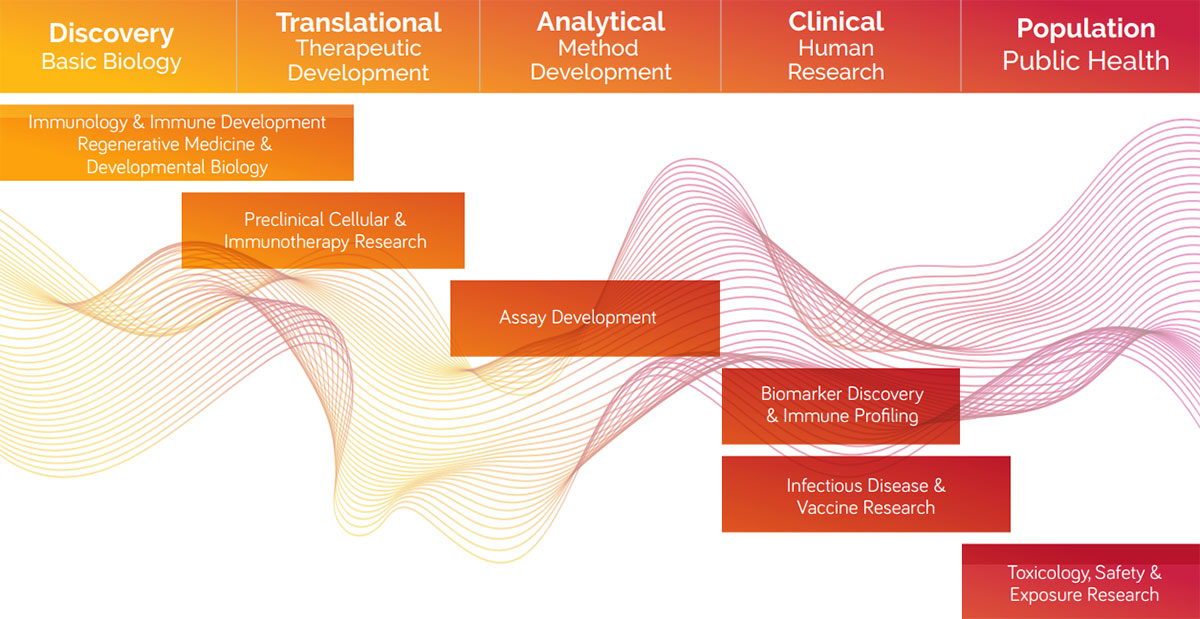
Research Applications for Cord Blood as a Starting Material
Cord blood supports a wide range of biomedical research applications spanning discovery science, translational research, and clinical investigation. Key areas where cord blood serves as an enabling research material include:
Immunology and Immune Development Research
Research in immune development centers around understanding how immune cells recognize and respond to pathogens and environmental exposures. Because cord blood possesses limited immune memory, studying the early phase of immune ontogeny is essential for understanding susceptibility to infection, vaccine responses, and origins of immune-mediated diseases.1 Potential study applications include:
- Study of early immune system development
- Evaluation of innate vs. adaptive immune maturation
- T-cell and NK-cell differentiation research
- Investigation of immune tolerance mechanisms
- Baseline immune biology studies using antigen-inexperienced cells
Preclinical Cellular and Immunotherapy Research
In cellular and immunotherapy research, cells are isolated, expanded, modified, or engineered outside of the body, and then studied for their ability to recognize, target, or repair tissues.2 In this context, cord blood functions not as a therapeutic product itself, but as a research platform that enables early discovery and translational development of cellular immunotherapies. Study applications can include:
- Isolation of NK cells, T cells, and hematopoietic progenitors
- Development of engineered immune cell platforms
- CAR-T and CAR-NK research and development
- Optimization of cell expansion protocols
- Evaluation of gene editing and genetic engineering approaches
- Exploration of allogeneic cell therapy concepts
Regenerative Medicine and Developmental Biology
Research into regenerative medicine focuses on investigating fundamental cellular proliferation and specialization to translate these biological insights into therapeutic approaches for conditions such as degenerative diseases, tissue injury, and organ failure.3 A central concept in this work is understanding the process by which stem and progenitor cells develop into specialized cell types with distinct biological functions. Accordingly, applications of cord blood research in these areas include:
- Study of hematopoietic progenitor differentiation
- Early lineage commitment modeling
- Investigation of developmental biology pathways
- Foundational research supporting regenerative strategies
Assay Development, Validation, and Controls
Assay development and validation research focuses on establishing reliable laboratory methods used to detect, measure, and characterize biological markers, cellular functions, or molecular signals. These assays enable investigators to generate reproducible data and ensure that biological measurements are accurate, sensitive, and analytically robust.4
Because cord blood contains defined populations of immune and hematopoietic cells with limited prior antigen exposure, it can provide a useful reference material for evaluating assay performance and establishing standardized testing methodologies. Potential research applications include:
- Source material for flow cytometry panel development
- Cytokine and functional immune assay validation
- Reference material for immune phenotyping
- Matrix for method development and standardization
Biomarker Discovery and Immune Profiling
Biomarker discovery research focuses on identifying measurable biological indicators that reflect physiological processes, disease states, or responses to therapeutic interventions.5 These biomarkers can support disease detection, patient stratification, and evaluation of treatment response across many areas of biomedical research.
Cord blood can provide a valuable baseline biological reference for understanding early immune andmolecular profiles. Because cord blood reflects the immune system at a developmental stage with minimal environmental exposure, it can serve as a useful comparator for identifying biomarkers associated with immune maturation or disease-related changes later in life. Potential research applications include:
- Transcriptomic and proteomic profiling
- Single-cell sequencing studies
- Baseline immune landscape characterization
- Identification of developmental or disease-associated biomarkers
Toxicology, Safety, and Exposure Research
Toxicology and exposure research investigate how environmental agents, pharmaceuticals, and other external factors influence biological systems and human health. A growing area of focus within this field involves understanding how exposures during pregnancy and early development may affect immunefunction, metabolism, or disease risk later in life.6 Studying these early-life exposures is critical for identifying potential safety risks and understanding mechanisms of developmental vulnerability.
Cord blood provides a unique biological sample for these investigations because it reflects the nascent environment at the time of birth. As a result, cord blood can be used to evaluate biomarkers of maternal exposure and investigate how prenatal factors influence early immune and developmental pathways.Potential research applications include:
- Assessment of prenatal drug exposure effects
- Study of environmental toxin exposure biomarkers
- Evaluation of maternal-fetal immune impacts
- Support for epidemiologic and mechanistic safety studies
Infectious Disease and Vaccine Research
Infectious disease and vaccine research focuses on understanding how pathogens interact with the immune system and how protective immune responses can be generated through vaccination. Research in this field often examines how immune responses differ across populations, including during early life when immune systems are still developing.7
Cord blood can provide insight into neonatal immunity and the transfer of protective antibodies from mother to child during pregnancy. Because cord blood contains immune cells and circulating antibodies present at birth, it offers a valuable resource for studying early immune responses and evaluating mechanisms that influence vaccine effectiveness and immune protection. Potential research applications include:
- Analysis of maternal antibody transfer
- Evaluation of maternal immunization strategies
- Evaluation of neonatal immune responses to pathogens
- Early immune priming studies
- Informing maternal and neonatal vaccine research
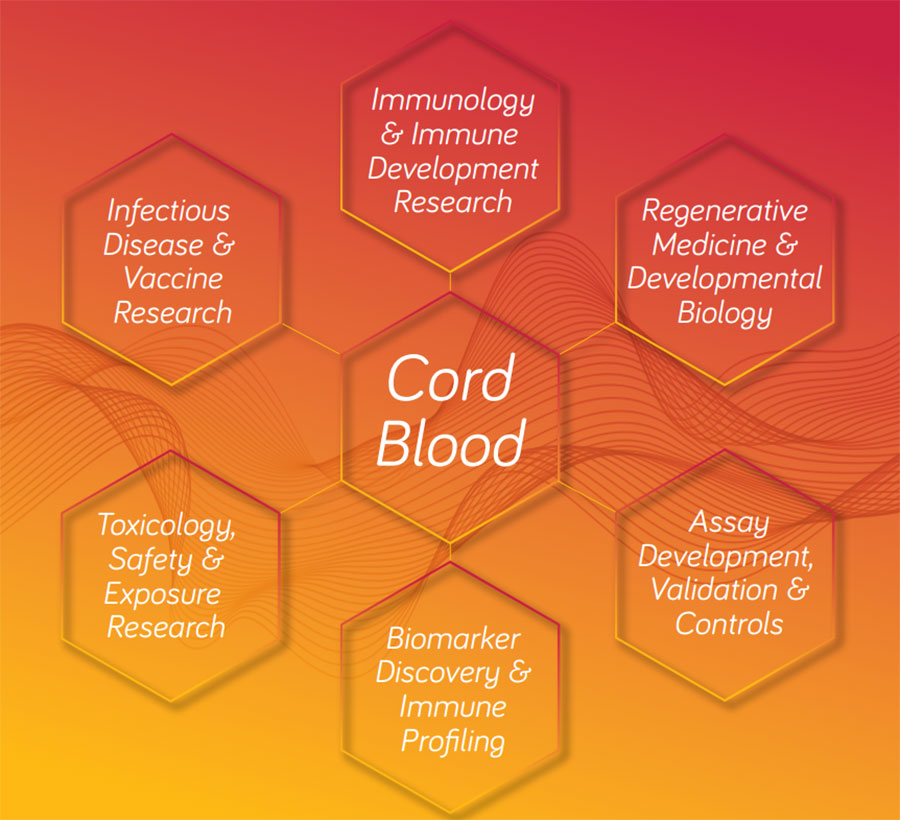
Conclusion
Cord blood represents a uniquely valuable biological resource for biomedical research. Its high concentration of hematopoietic stem and progenitor cells, naïve immune profile, and accessibility at birth enable investigations spanning basic biology, translational science, clinical research, and population health. Across these domains, cord blood supports scientific discovery that advances understanding of human development, informs therapeutic innovation, and ultimately contributes to improving patient outcomes.
References
- de Moraes-Pinto MI. Immune system: development and acquisition of immunological competence. JPediatr (Rio J). 2020;96(Suppl 1):S46-S52.
- Irvine DJ, Maus MV, Mooney DJ, Wong WW. The future of engineered immune cell therapies. Science.2022;378(6622):853-858. doi:10.1126/science.abq6990
- Hoang VT, et al. Tissue engineering and regenerative medicine: current progress and future directions.Tissue Eng Regen Med. 2025.
- Burd EM. Validation of laboratory-developed molecular assays for infectious diseases. Clin Microbiol Rev.2010;23(3):550-576. doi:10.1128/CMR.00074-09
- Califf RM. Biomarker definitions and their applications. Exp Biol Med (Maywood). 2018;243(3):213-221.doi:10.1177/1535370217750088
- Bezek S, Ujházy E, Mach M, Navarová J, Dubovický M. Developmental origin of chronic diseases:toxicological implication. Interdiscip Toxicol. 2008;1(1):29-31. doi:10.2478/v10102-010-0029-8
- Kennedy RB, Ovsyannikova IG, Lambert ND, Haralambieva IH, Poland GA. The personal touch: strategiestoward personalized vaccines and predicting immune responses to them. Expert Rev Vaccines.2014;13(5):657-669. doi:10.1586/14760584.2014.905744
About Versiti
Versiti provides expert support for a diverse range of clinical trial needs. Our comprehensive approach includes logistics, assay and biomarker development, IRB services, central laboratory services, blood products for research, and more. Our depth of expertise across the spectrum of blood health and clinical trials ensures nimble, high-quality, efficient and reliable results. We are your partner throughout every stage of your clinical or academic research.
To learn more about Versiti’s clinical trial services and biomaterials for research, visit versiticlinicaltrials.org, or contact us at clinicaltrials@versiti.org.